
Best LED Dog Collars for Night Walks and Off-Leash Dogs
Gear & Hound is reader-supported. As an Amazon Associate we earn from qualifying purchases. When you buy through links on this page, we may receive an affiliate commission at no additional cost to you. Our editorial picks are independent of commercial relationships.
The case for an LED dog collar comes down to a specific moment that drivers, cyclists, and other dog owners eventually have: noticing the collar before noticing the dog.
That distinction — active light you generate versus passive light you bounce back — is the entire reason this category exists. Reflective gear is brilliant when a light source is already pointed at your dog. It does little in a yard with no street lamps, in tall grass at dusk, on a trail where the only headlamps belong to oncoming mountain bikers who don’t yet know you’re there. LED collars solve the visibility problem from the other side: the dog becomes the light source, visible to anyone scanning the dark before they’d otherwise have reason to look.
This guide is a structured review of the most popular LED dog collars currently listed on Amazon — drawn from manufacturer specifications, long-stable brand documentation, and the body of independent owner reviews. We don’t claim to have walked every collar in every condition; what we do is read the spec sheets carefully, flag what’s verifiable versus marketing-speak, and tell you which trade-offs to make for your dog’s actual use case. Here’s what’s worth your money, what isn’t, and the specs to look up on each Amazon listing before you click buy.
What to look for in an LED dog collar
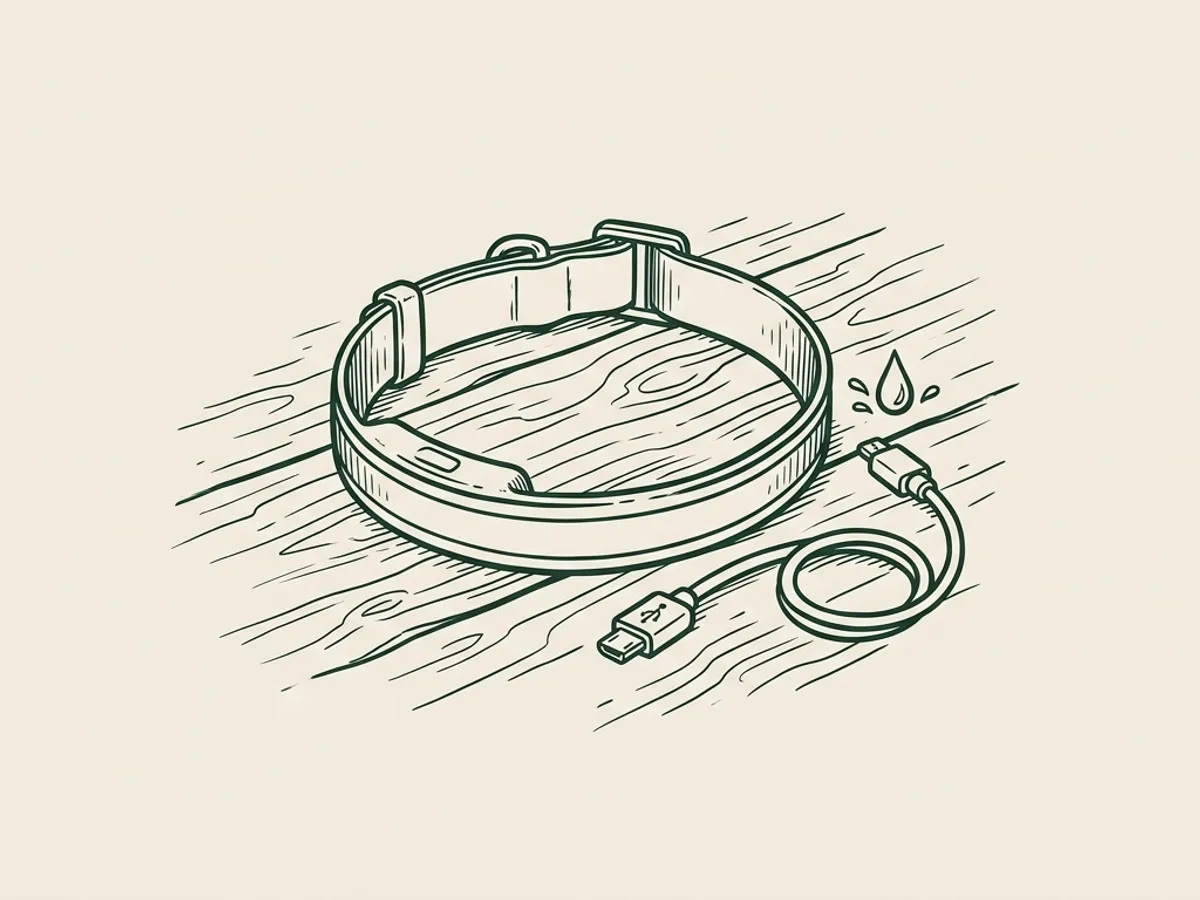
Four things separate a collar you’ll still be using next year from one that lives in a drawer by March.
Battery type and runtime. USB-rechargeable collars (micro-USB on older models, USB-C on newer ones) are the dominant format and the right default for most dogs. Coin-cell collars are cheaper up front and instantly dead at the worst moment; if you go that route, buy a strip of spare batteries the same day. Whatever the format, look for a published runtime — a brand willing to put “8 hours” on the box is a brand that tested it. Vague claims (“long-lasting!”) usually aren’t.
Visibility distance. The honest version of this spec is “visible to a driver paying attention, on a clear night, at the stated distance.” Manufacturer claims of a quarter mile or 1,000 feet are real but optimistic — fog, rain, and a tired commuter all cut that number down. Treat the published figure as a ceiling, not a floor.
Water resistance. This is where marketing gets slippery. “Water-resistant” usually means splashes and light rain. “Waterproof” should mean an IPX rating (IPX7 means full immersion for 30 minutes at one meter). If a brand says waterproof but won’t give you a rating, assume splash-only.
Fit. Neck circumference ranges vary wildly. A Cardigan Corgi (14–16 inches) and a Bernese Mountain Dog (22–26 inches) cannot share a collar. Measure your dog’s neck with a soft tape, snug but with two fingers’ clearance, and match it against the brand’s published size chart — not against the photo of the model dog, which is always a Golden Retriever.
Comfort and weight. The lightest collars use a flexible silicone or TPU tube with the LED strand running through it. Heavier nylon-webbing collars with sewn-in LED strips are more durable but bulkier on smaller dogs. If your dog already wears a flat collar with tags, you can run an LED collar as a second loop above it — most owners do.
Our editorial picks
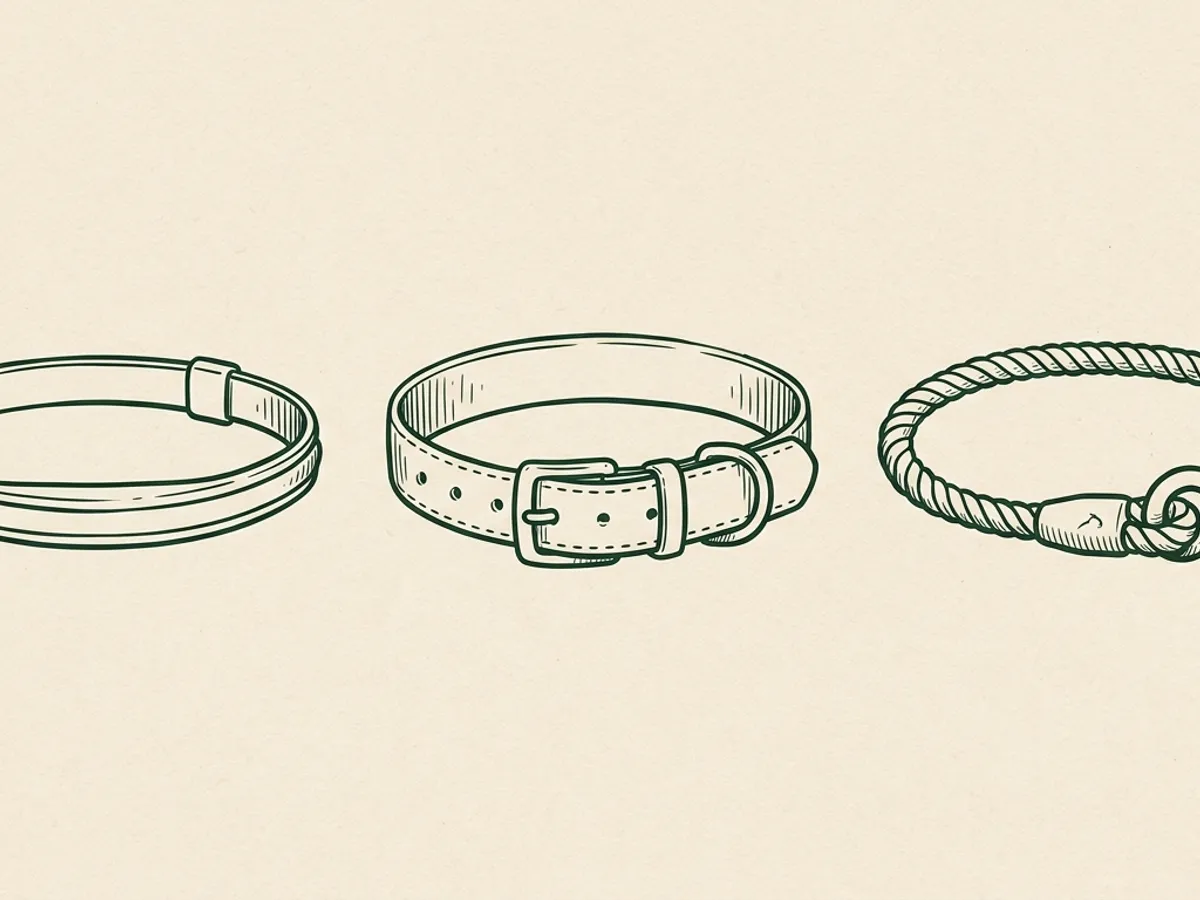
Nite Ize NiteHowl LED Safety Necklace — best overall for visibility
Best for: Drivers seeing your dog from a distance on suburban and rural roads.
The NiteHowl is the incumbent for a reason: it’s the collar that other LED collars are trying to be. It’s a flexible tube design that loops around the dog’s neck and clips closed, sized by trimming the excess tubing to fit — meaning a single collar fits a wide range of neck sizes rather than locking you into a small/medium/large purchase you might outgrow.
Nite Ize is a Boulder-based hardware brand that’s been making LED safety gear since the early 2000s, and the NiteHowl benefits from that institutional knowledge. The light is even along the entire loop, not just at the clasp, which is what you actually want when a driver is approaching from any angle. The original NiteHowl uses a replaceable battery; the rechargeable version (NiteHowl Rechargeable) charges via USB. We recommend the rechargeable version for daily walkers and the original for people who only need it occasionally.
Shop the Nite Ize NiteHowl on Amazon
Illumiseen LED Dog Collar — best for an even, premium glow
Best for: Owners who want a flat-collar form factor with a continuous lit band.
Illumiseen runs the LED filament inside a nylon-webbing collar with a quick-release buckle, which is a meaningful comfort upgrade over tube-style designs for dogs that already wear a flat collar. The brand has been in the LED category since the mid-2010s and is one of the few in this space that publishes its sizing chart in actual inches rather than vague S/M/L abstractions — measure your dog and order accordingly.
The collar is USB-rechargeable, offers steady-on and two flashing modes, and the light wraps the full circumference. The pitch is consistency over peak brightness — an even glow around the dog’s neck that reads as deliberate rather than novelty, which is what most everyday twilight walkers want.
Shop the Illumiseen LED Dog Collar on Amazon
BLAZIN’ Safety LED USB Rechargeable — best for big dogs who chew through cheap collars
Best for: Working breeds, large dogs, anyone who’s already replaced two cheaper collars.
BLAZIN’s reputation in the LED category is built on durability. The webbing is heavier than the Illumiseen, the buckle hardware is sturdier, and the LED strip is housed in a protective channel that survives normal dog behavior — rolling in grass, brushing against fences, the occasional altercation with a hedge.
It’s USB-rechargeable and offers the standard three modes (steady, slow flash, fast flash). For a 75-pound retriever or anything bigger, this is the collar that lasts.
Shop the BLAZIN’ Safety Collar on Amazon
LaRoo LED Dog Collar — best budget pick
Best for: First-time LED-collar buyers, second collars for occasional use, puppies you’ll need to size up out of in six months.
LaRoo’s tube-style USB-rechargeable collar gets you most of what the NiteHowl offers at a lower price point. The light isn’t quite as even and the materials feel a little less premium, but for a dog who walks at twilight twice a week, it does the job. Buy it knowing it’s a budget pick and you won’t be disappointed.
Shop the LaRoo LED Dog Collar on Amazon
BSEEN LED Dog Collar — best for small dogs and puppies
Best for: Dogs under 25 pounds who get swallowed by adult-sized collars.
BSEEN sizes down further than most brands in this category, which makes it the default recommendation for small breeds, puppies, and senior small dogs who need visibility on porch trips after dark. The tube design is lightweight enough not to bother a Yorkshire Terrier, and the USB charge port is sealed against light moisture.
Measure your dog’s neck before ordering — BSEEN’s smallest sizes really are small, and a Pomeranian collar will not fit a Beagle.
Shop the BSEEN LED Dog Collar on Amazon
NoxGear LightHound — the honorable mention that isn’t actually a collar
Best for: Off-leash adventure dogs in genuinely dark environments — trails, beaches, fields without ambient light.
A note on category: the NoxGear LightHound is a vest, not a collar. It wraps around the dog’s chest and shoulders with illuminated fiber-optic strips visible from all angles. If your visibility problem is suburban — drivers seeing your dog from the side as you walk a sidewalk — a collar is the right tool. If your visibility problem is you needing to track an off-leash dog across unlit terrain, the LightHound’s full-body lit surface is dramatically larger than any collar, and owner reviews consistently flag this as the reason long-distance off-leash dog handlers prefer it.
We mention it here because searchers looking for “LED dog collar” often actually want the LightHound and don’t know the product exists.
Shop the NoxGear LightHound on Amazon
LED collars vs reflective collars vs reflective accessories
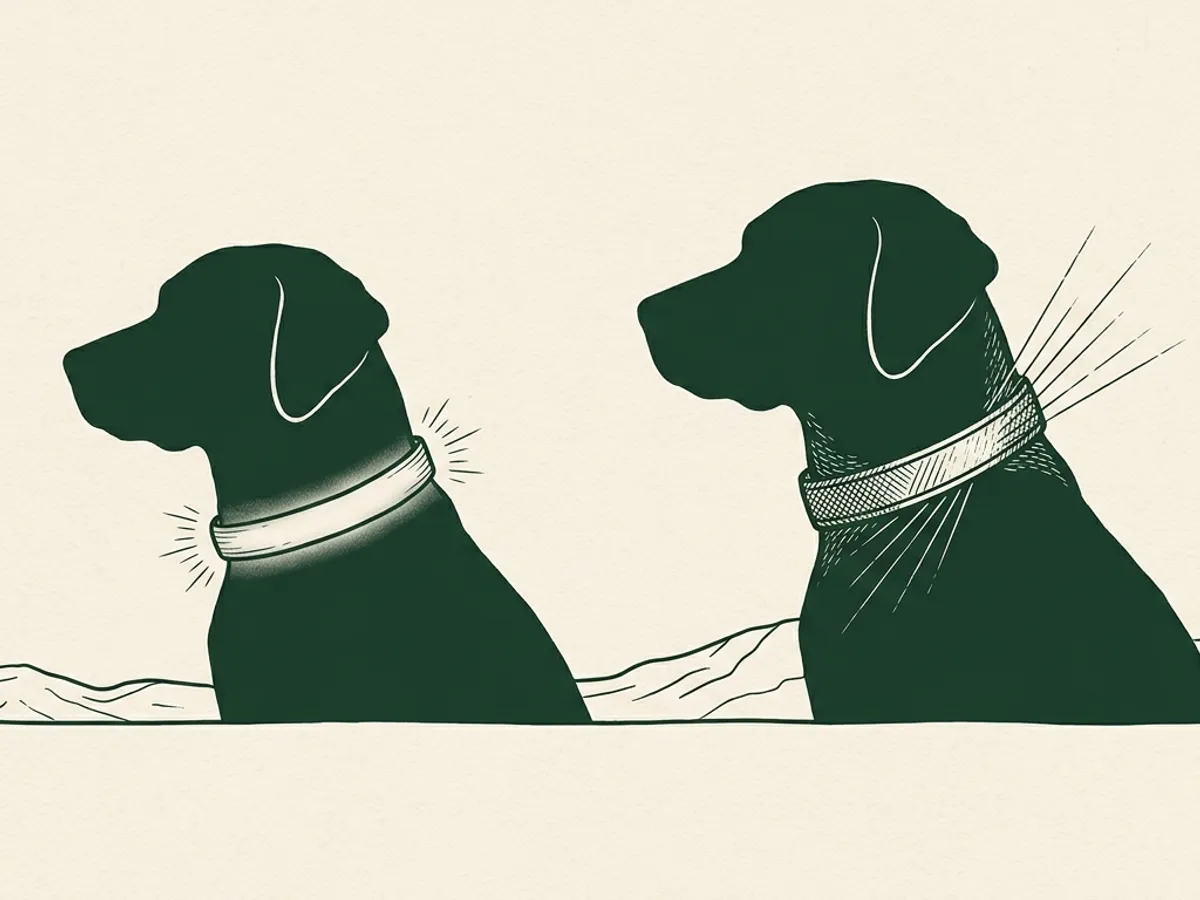
The decision tree is shorter than the marketing makes it look.
Use an LED collar when you need to be seen before a light source reaches your dog — rural roads, neighborhood walks where streetlights are sparse, dawn and dusk transitional light, any environment where the driver’s headlights haven’t yet swept across your path.
Use a reflective collar when you’re walking primarily under street lamps or in environments where headlights and flashlights will inevitably reach your dog before they reach you. Reflective gear is lighter, never needs charging, and costs less — for the right environment, it’s the smarter pick. (We have a separate guide to reflective collars in the same active-dog-gear cluster.)
Use both if you walk in mixed environments. They don’t conflict — many owners run an LED collar as a second loop above a daily flat reflective collar, switching the LED on only when light conditions warrant.
Buying notes and FAQ
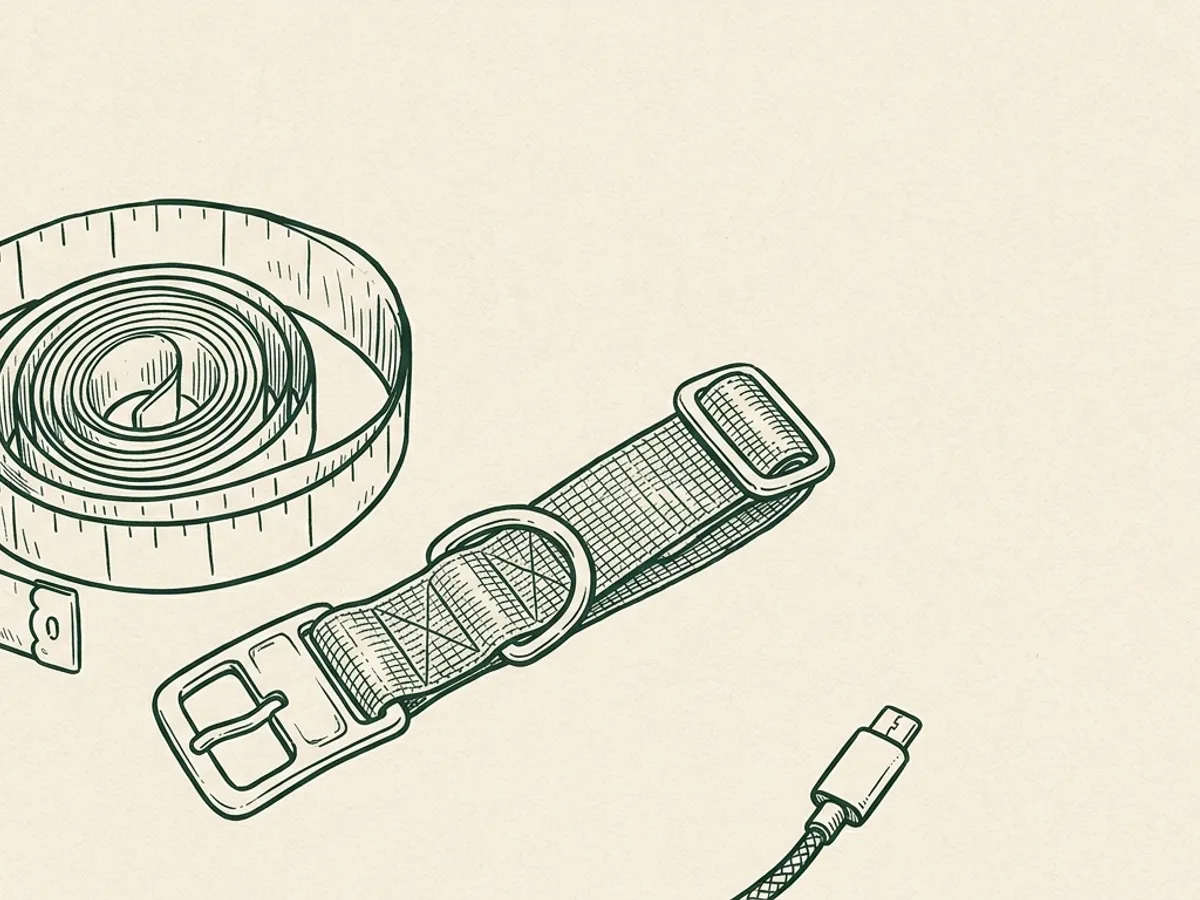
How do I charge a USB LED collar? Most ship with a short USB-A cable; the collar end is either micro-USB (older models) or USB-C (newer). If your household has standardized on USB-C, that’s a small but real reason to prefer a newer-generation collar.
What if my dog hates wearing it? The flexible tube-style collars (NiteHowl, LaRoo, BSEEN) are lighter and less noticeable than webbing-style collars. Start with short wear sessions during enjoyable activities — meals, walks, the moment before you throw the ball — and the collar becomes a positive signal rather than a strange new object.
For non-rechargeable models, how long do the batteries last? Coin-cell-powered collars typically run 50–100 hours of intermittent use before the cells need swapping. Always carry one set of spares. Always.
Can my dog swim with it on? Only if the product explicitly states an IPX7 or higher rating. “Water-resistant” alone is not a swim authorization. Even waterproof collars should be rinsed in fresh water after saltwater or chlorinated swims.
How do I size it? Measure your dog’s neck with a soft fabric tape, snug but with room to slide two fingers underneath. Match that number — in inches or centimeters — to the brand’s published sizing chart. Do not order by weight category; neck circumference and body weight are loosely correlated at best.
Editor’s pick
For most dogs on most walks, the Nite Ize NiteHowl is the right call — the visibility is excellent, the fit accommodates a wide range of dog sizes, and the brand has the longest track record in the category. If your dog is large and rough on gear, step up to the BLAZIN’ Safety LED. If you’re walking small dogs or puppies, BSEEN sizes down where others stop. And if you’re tracking an off-leash dog across genuinely dark terrain, skip the collar category entirely and look at the NoxGear LightHound vest.
The goal isn’t to buy the most expensive option. It’s to buy the one your dog will actually wear, on the walks you actually take, in the light conditions you actually walk in. Match the tool to the problem and the rest sorts itself out.